Around The Word Theology for the Curious Christian
  • Home
  • Columns
    • The Straight Path- Brian Flamme
    • Lifted Voice- Brian Hamer
    • The Double Edged Sword- Sean Kilgo
    • Master Metaphors of Philosophy
    • Public Square- Warren Graff
    • Top 5- Bob Hiller
    • Christ in the Old Testament- Brian Kachelmeier
    • Who Knows What- Bryan Wolfmueller
    • Neglected Theological Topics- Jared Melius
    • The Cross- Andrew Preus
    • The Science Corner
    • Theological Miscellany >
      • The Conscience
      • Miscellany
  • Devotions
    • Christ and the Church 30-Day Marriage eDevotion
  • Bible Studies
    • Special Bible Studies
    • Bible Study Archive
  • Support

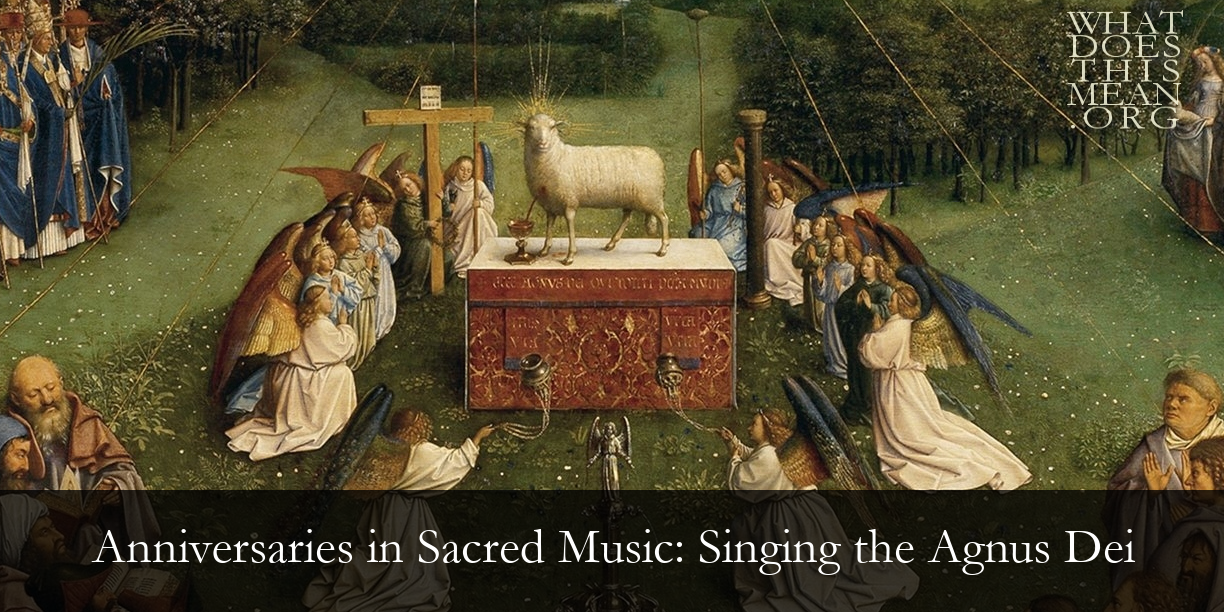
Anniversaries in Sacred Music: Singing the Agnus Dei with Frank Martin and Ralph Vaughan Williams

8/10/2022

0 Comments

 
Picture
Grant peace, we pray, in mercy Lord;
Peace in our time, O send us!
—Martin Luther (after a Latin hymn)
​
​Peter Bender describes the text of the Agnus Dei, “Lamb of God”:
[The Agnus Dei] is the fifth and final great hymn of the Divine Service. The words, “Behold! The Lamb of God who takes away the sin of the world!” were first spoken by John the Baptist in the public announcement of Jesus’ ministry. These words are the sum and substance of what our Lord came to do. (Lutheran Catechesis, p. 119) 
In Christ, the Lamb of God, the two-part plan of the Passover is fulfilled: kill the lamb and eat the lamb. The death the of Lamb of God is a once-for-all, calendar-day event. But the eucharistic eating of the Lamb continues around the world until Christ returns. We are accustomed to singing the three-fold Agnus Dei one time, but Art Just notes the Medieval precedent for singing it ”as long as there was bread to break” (Christ’s Gifts in the Liturgy: The Theology and Music of the Divine Service, p. 41). How fitting that Jesus is described as the Lamb of God thirty times in the eschatology of the book of Revelation, where Jesus is enthroned as the Lamb who is worthy “to receive power and wealth and wisdom and might and honor and glory and blessing” (Rev. 5:12).
​

Read More
0 Comments

Anniversaries in Sacred Music: Singing the Sanctus with Frank Martin and Ralph Vaughan Williams

8/1/2022

0 Comments

 
Picture
Holy, holy, holy, Lord God Almighty: Which was and is and is to come.
—Antiphon for Trinitytide
​
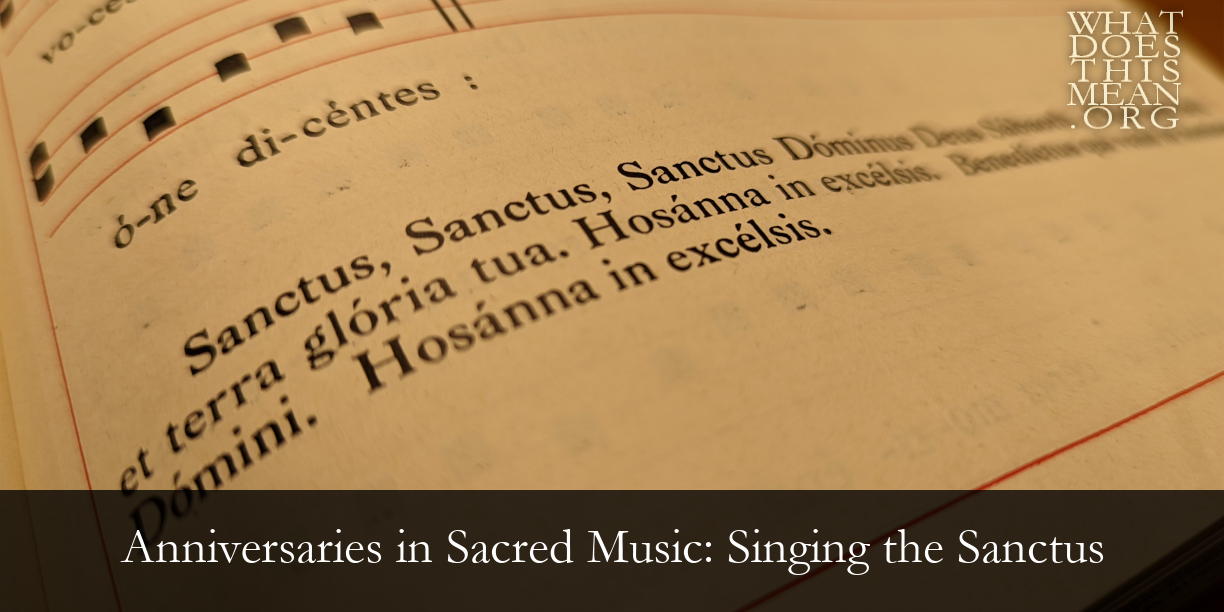
​Peter Bender describes the role of the Sanctus (please see the Latin and English text below) as the fourth of the five pillars (along with the Kyrie, Gloria, Credo, and Agnus Dei) of the Divine Service:
​[The Sanctus] was sung by the angels when Isaiah the prophet was called by the Lord to preach repentance and the forgiveness of sins to sinners (Isaiah 6). In Isaiah’s vision we are taught that heaven, which had been closed to us because of sin, is now open for the sinner through the good news of Christ’s forgiveness. This forgiveness is given to us in the Word of Christ which comes to us in His gifts of preaching, Baptism, Absolution, and the Lord’s Supper. (Lutheran Catechesis, p. 107)
Isaiah’s encounter with the holy set the precedent for the Lord’s Supper as “the holy things for the holy ones,” i.e., the holy body and blood of Christ are only for those who have been made holy through Baptism and have heard the cleansing word of Absolution. The Lord’s words to Isaiah in his temple vision also apply to us in the means of grace: “Your sin is taken away and your guilt is atoned for.”
​

Read More
0 Comments

Anniversaries in Sacred Music: Singing the Nicene Creed with Frank Martin and Ralph Vaughan Williams

6/24/2022

0 Comments

 
Picture
To Thee, O unbegotten One, And Thee, O sole-begotten Son,
And Thee, O Holy Ghost, we raise / Our equal and eternal praise
—From the Tenth-Century Latin Hymn,
​“Be present, holy Trinity”

In our five-part survey of the settings of the ordinary of the Mass by Frank Martin (1890–1974) and Ralph Vaughan Williams (1872–1958), we now come to the heart of the Mass ordinary and its unique opportunities for text painting, the Nicene Creed. Consider, for a moment, the five parts of the Mass which have inspired countless composers through the centuries:

Kyrie (“Lord, have mercy”)
Gloria (“Glory be to God on high”)
Credo (“I believe in one God”)
Sanctus (“Holy, holy, holy”)
Agnus Dei (“Lamb of God”)
​

Read More
0 Comments

Anniversaries in Sacred Music: One Hundred Years of Singing the Gloria with Frank Martin and Ralph Vaughan Williams

5/31/2022

2 Comments

 
Picture
We beheld the glory, as of the only-begotten from the Father, full of grace and truth.
—St. John 1:14
​
Recall from the first installment of this special series on settings of the Mass for double choir by Frank Martin (1890–1974) and Ralph Vaughan Williams (1872–1958) that these two choral masterworks overlap historically and stylistically. Martin began writing his Mass in 1922, finished it in 1926, but curiously concealed it until the early 1960s. Vaughan Williams (hereinafter RVW) wrote his Mass in G minor in 1922, but with no idea that Martin was writing a similar work, much less any notion that the two works would become unofficial ‘choral companions’ a century later. Stylistically, both works draw upon older compositional methods, perhaps most notably the motet, a compositional process in which the musical themes change with each word or phrase of the text. But both composers also employed newer compositional methods, earning both works a permanent place in the choral repertoire. Please join me during this, the latter portion of the Easter season, to explore how these composers treat the Gloria.
​

Read More
2 Comments

Cantatas Over Coffee: J. S. Bach Cantata 104 for Good Shepherd Sunday

5/4/2022

0 Comments

 
Picture
When the chief Shepherd appears, you will receive the unfading crown of glory.
— I Peter 5:4
​
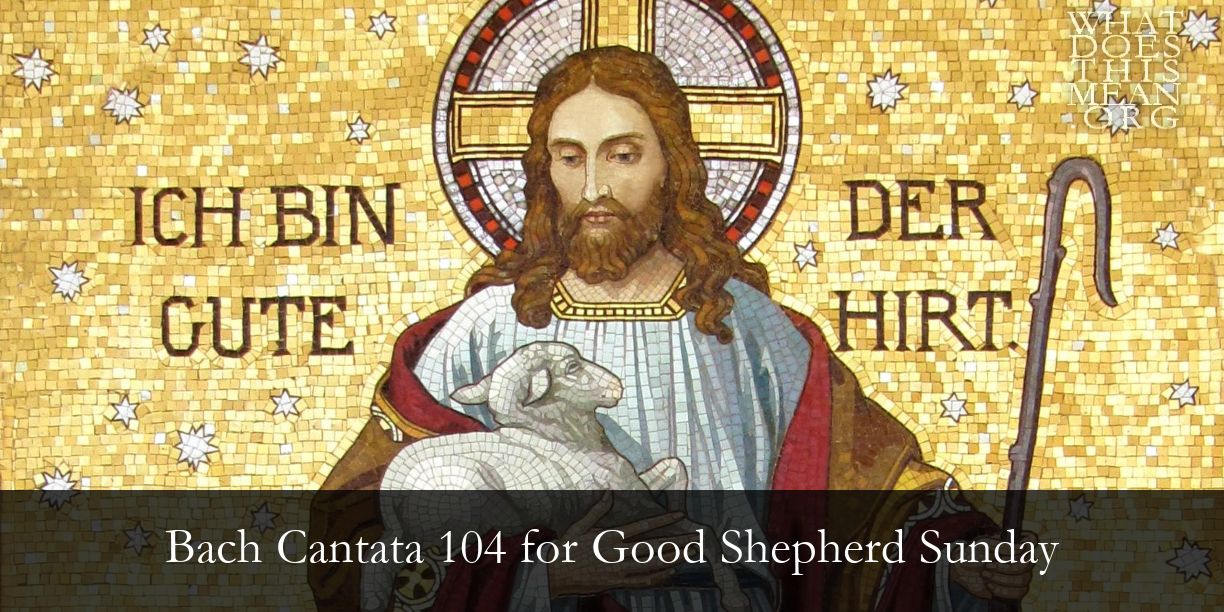
The liturgical context for Cantata 104, “Thou Shepherd of Israel, Hear Us” is Misericordias Domini Sunday, informally called “Good Shepherd Sunday.” Most modern readers probably associate the Good Shepherd theme with the Fourth Sunday of Easter, placing the theme of Christ the Good Shepherd at the very center of the seven Sundays of the Easter season. But the flock in Bach’s day, and almost universally from Medieval days to the 1960s, expected the portrait of Jesus as the Good Shepherd on the second Sunday after Easter. The Introit declares that the “earth is full of the goodness of the Lord; by the word of the Lord were the heavens made,” declaring from the start of the service that every good gift in this world is under the auspices of the risen Shepherd. The Epistle (I Peter 2:21–25) reminds the faithful of their true calling and their identity as Christ’s sheep: “For you were straying like sheep, but have now returned to the Shepherd and Overseer of your souls” (v. 25). The Verse (St. Luke 24:35b; St. John 10:14) and the Gospel (St. John 10:11–16) draw from John 10, declaring the good news that the Shepherd knows, loves, and even dies for His sheep. His sheep (i.e., the elect), in turn, know their Shepherd, hear His voice, and follow Him. Psalm 23 is curiously absent from the historic propers for this Sunday, but church musicians can easily incorporate it as a choral response or attendant music, as J. S. Bach (1685–1750) did with the Good Shepherd theme in Cantata 104.
​

Read More
0 Comments

Singing the Praise of Him Who Died: “It is Finished” by J. S. Bach for Good Friday

4/13/2022

2 Comments

 
Picture
Behold, the Lion of the tribe of Judah, the Root of David, has conquered,
so that he can open the scroll and its seven seals.
—Revelation 5:5
​
“There is one thing to preach, the wisdom of the cross.” These oft-quoted words of Luther come from a sermon fragment from 1515, wherein Luther was answering the question, “What shall I preach?” Hermann Sasse (1895–1976) summarizes what this means for the church, especially as she prepares yet again to ponder on Jesus’ Holy Passion: “The wisdom of the cross, the word of the cross, a great stumbling block to the world, is the proper content of Christian preaching, is the Gospel itself. So thinks Luther and the Lutheran Church with him.” To be sure, the centrality of the cross does “does not mean that for the theologian the whole church year shrinks to Good Friday.” Rather, Sasse says, it means that “one cannot understand Christmas, Easter, or Pentecost without Good Friday” (Letters to Lutheran Pastors, 1:387).
​

Read More
2 Comments

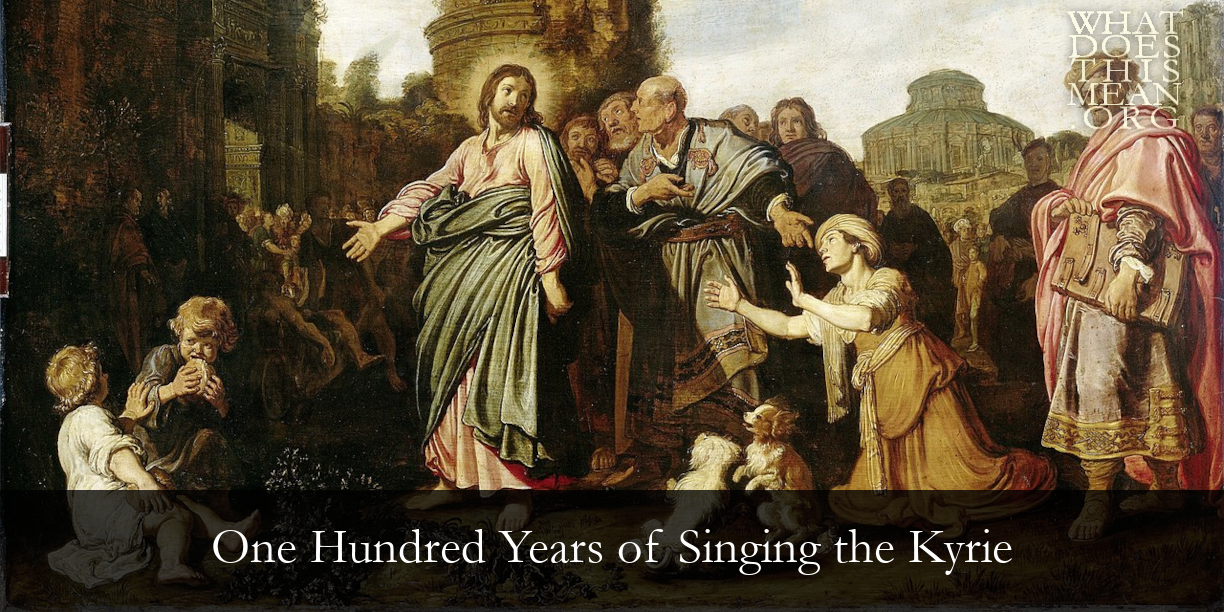
Anniversaries in Sacred Music: One Hundred Years of Singing the Kyrie with Frank Martin and Ralph Vaughan Williams

3/30/2022

0 Comments

 
Picture
“Jesus, Master, have mercy on us!”
—St. Luke 17:13
​
Among the significant anniversaries in sacred music in the year 2022 are two musical settings of the Mass, both with origins in the year 1922. Frank Martin (1890–1974) began writing his Mass in 1922. Ralph Vaughan Williams (1872–1958) wrote his Mass in G minor in 1922. Both are scored for double choir, are similar in scope and sequence, and have risen to the top of choral gems of the twentieth century. Please join me this year to explore each movement of both settings, beginning with the Kyrie, with four more issues to follow, arranged according to the seasons and readings of the church year.
​

Read More
0 Comments

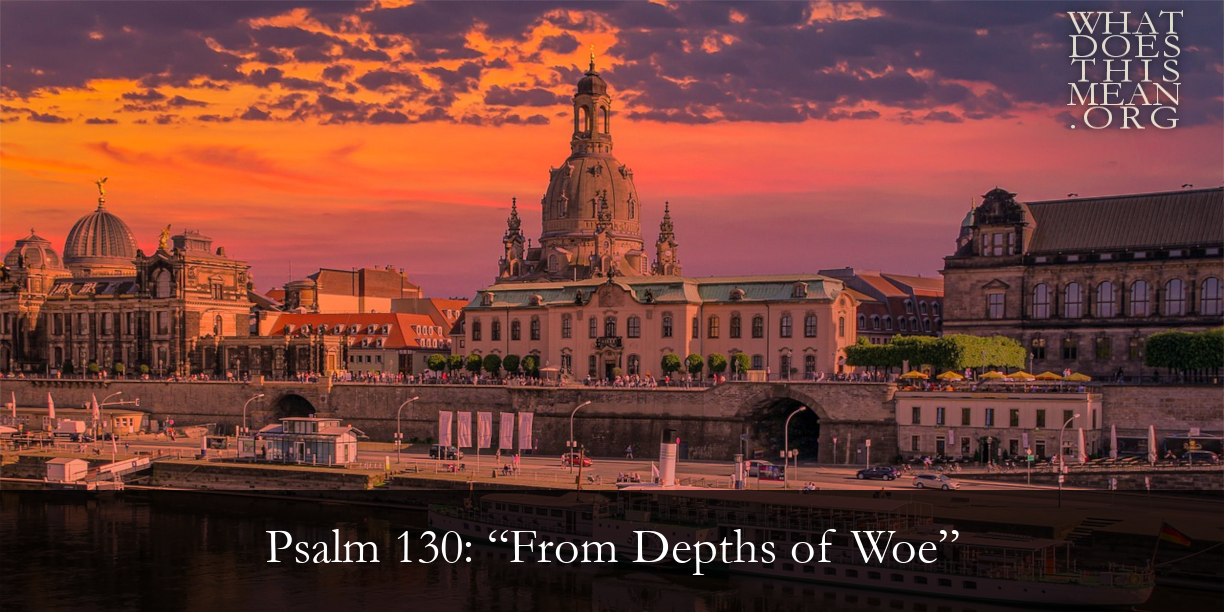
On Psalms, Hymns, and Spiritual Songs: Psalm 130, “From Depths of Woe” A Musical Post Card from Dresden

2/28/2022

0 Comments

 
Picture
O God, condemn us not according to the multitude of our iniquities,
but quicken with Thy plenteous compassion those who confess and return unto Thee.
—From a Collect after Psalm 130
​
As the church approaches Ash Wednesday and the season of Lent, it is fitting to explore one of the penitential psalms, Psalm 130, with special focus on Luther’s hymn after this Psalm, “From depths of woe I cry to Thee.” Composers of the 16th, 17th, and 18th centuries have worked wonders with Luther’s hymn. This issue will focus on three composers—Johann Walter, Matthäus Le Maistre, and Heinrich Schütz—who worked in Dresden and who set Luther’s hymn to music.
​

Read More
0 Comments

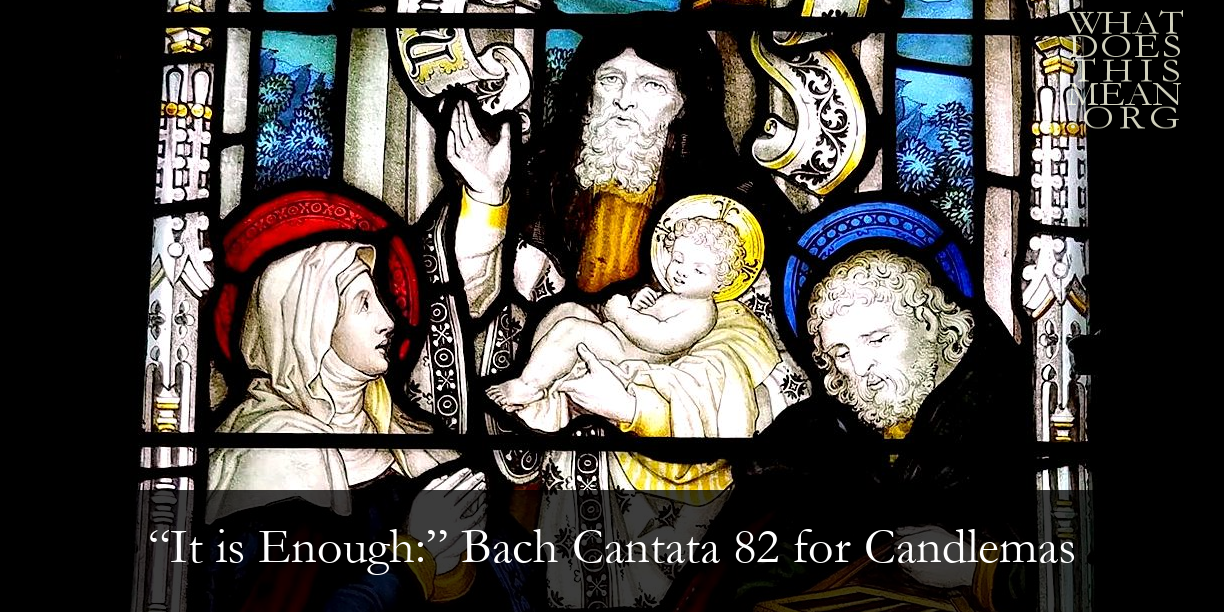
Cantatas Over Coffee: J. S. Bach, ‘It is Enough’ Cantata 82 for Candlemas

1/28/2022

0 Comments

 
Picture
In His temple now behold Him, See the long-expected Lord!
— Hymn by Henry J. Pye
​
Nota Bene: During my ministry in Queens, NY, my wife and I developed a close friendship with Rev. John Stoudt (Emmaus Lutheran, Ridgewood) and his wife, Faith, who taught at my church’s elementary school. During this time (2002–2015), we attended the annual Candlemas service and banquet at Emmaus. Faith was diagnosed with cancer about two years ago and fell asleep in Jesus after suffering a stroke last month. This column on Candlemas and departing this world in peace is dedicated to her memory, 1958–2022.

According to the Gospel Lesson for this day, St. Luke 2:22–40, forty days after his birth, the infant Lord was presented in the Temple to fulfill the promise of Malachi, “The Lord whom ye seek will suddenly come to His temple” (3:1), as well as the Mosaic Law for purifying mothers after child birth (Lev. 12:2–5). Jesus’ parents offered the alternative sacrifice of two turtledoves or two pigeons, the offering of the poor who could not afford a lamb, showing the poverty and humility of Joseph and Mary. And yet, no lamb was necessary because the infant Jesus is the Lamb of God, who takes away the sin of the world. Simeon prayed the Nunc Dimittis, a prayer of great comfort and consolation for all who hold Christ in the arms of faith and in the Holy Eucharist.
​

Read More
0 Comments

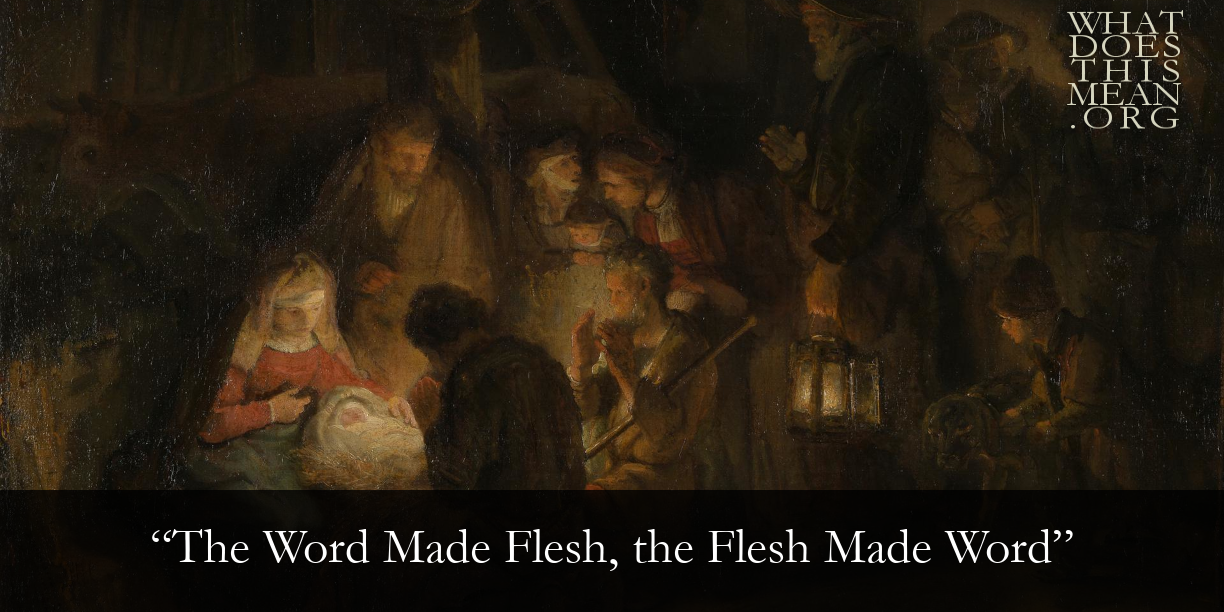
“The Word Made Flesh, the Flesh Made Word”: Three Choral Settings on John 1

12/20/2021

0 Comments

 
Picture
By the mystery of Your holy incarnation . . . Help us, good Lord.
— The Litany
​
Hymns for Christmastide are generally based on St. Luke’s Christmas narrative (Luke 2:1–21) or St. John’s Prologue on the Word made flesh (John 1:1–14). Hymns expounding on Luke 2 (“Once in Royal David’s City,” “What Child Is This,” et al.) generally focus on the history of the Christmas story and the response of penitent faith. Hymns based on John 1, however, usually proclaim the theology of the incarnation and how the Christ is enfleshed among us: “Not by human flesh and blood, By the Spirit of our God, Was the Word of God made flesh” and “Veiled in flesh the Godhead see, Hail the incarnate Deity.” Sacred choral music for the season also follows these two complementary theological paths, which the church year traces from Christmas Eve (usually focused on Luke 2) to the Christ-Mass, with its appointed Gospel Lesson from John 1. Christmas Eve having passed this year, please join me during the Twelve Days of Christmas to explore three settings of selected verses of John 1 in Latin, German, and English, all coincidentally written by composers whose last name starts with the letter “H.”
​

Read More
0 Comments
<<Previous
Forward>>
    Picture

    Pr Brian Hamer

    Brian J. Hamer is Chaplain to School of Infantry West at Marine Corps Base Camp Pendleton via the LCMS Board for International Mission Services.

    Archives

    September 2026
    October 2025
    August 2025
    June 2025
    December 2024
    October 2024
    June 2024
    May 2024
    March 2024
    February 2024
    December 2023
    November 2023
    October 2023
    September 2023
    June 2023
    April 2023
    December 2022
    August 2022
    June 2022
    May 2022
    April 2022
    March 2022
    February 2022
    January 2022
    December 2021
    November 2021
    October 2021
    September 2021
    July 2021
    June 2021
    May 2021
    April 2021
    March 2021
    February 2021
    January 2021
    November 2020
    October 2020
    September 2020
    August 2020
    July 2020
    June 2020
    May 2020
    April 2020
    November 2019
    October 2019
    September 2019
    November 2018
    September 2018
    July 2018
    June 2018
    March 2018
    February 2018
    December 2017
    October 2017
    September 2017
    August 2017
    June 2017
    April 2017
    February 2017
    January 2017
    December 2016
    November 2016
    October 2016
    September 2016
    July 2016
    June 2016
    May 2016
    January 2016
    November 2015
    October 2015
    August 2015
    April 2015
    February 2015
    January 2015
    December 2014
    November 2014

    Categories

    All
    Brian Hamer
    Christmas Hymns
    Epiphany Hymns
    Hymns
    Liturgy
    Of The Father's Love Begotten

    RSS Feed

Like what you see here? Donate to Around the Word.